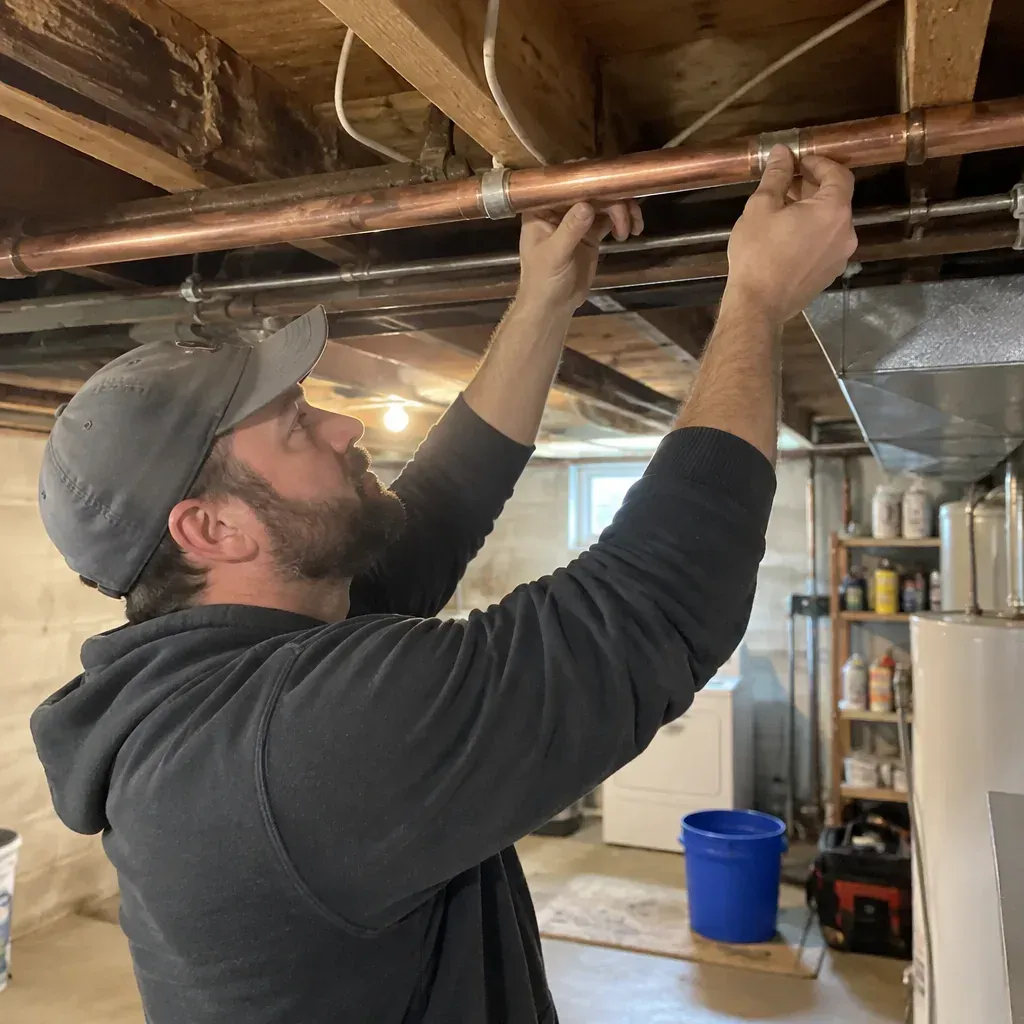
Why Pipe Condition Changes Repair Options
Elgin shares the Chicago region’s cold-winter conditions; January’s reported mean temperature at O’Hare is below freezing. Water in exposed or poorly heated plumbing can freeze and strain a line. That regional context makes winter relevant, but weather alone cannot establish what caused a particular home’s leak.
Elgin’s winter freeze context can expose water lines in poorly heated spaces to freezing conditions; it does not establish why a particular pipe split. Housing ranges from historic-district homes to other residential types, so copper lines may run through different parts of each building and present different access needs.
Residential calls come from across Elgin and Kane, including homes with different layouts and pipe access. Explain where you noticed water and how you can safely reach the affected area; the pros we connect you with can discuss service for your location.
Locating the Hidden Leak
- MATERIAL
- A copper supply line can release water when a split opens while the system is pressurized, including inside a concealed space.
- CONDITION
- A plumber checks the copper beside the opening because weakened metal may not hold a new connection securely.
- ACCESS
- When the break is limited and the surrounding copper is sound, removing only the damaged portion may be feasible.
- METHOD
- Preparing the pipe ends is another part of making a sound copper connection.
- VERIFICATION
- For copper lines near the Elgin National Watch District, matching tube size and joint style helps the pros we connect you with choose compatible fittings and verify the splice.
- WARNING SIGNS
- Elgin’s regional winter climate has January averages below freezing, which can put water-filled, unheated copper runs at risk. Seasonal temperature changes also move exposed pipe slightly. After a cold spell, inspect visible lines for fresh moisture; weather alone cannot confirm why a particular pipe failed.
- ESTIMATE
- an estimated $275–$1,100
Recognizing a Pressurized Line Failure
PEX pipe repair uses fittings and joining methods made for flexible plastic tubing. It can be confused with copper repair when both leaks appear at a supply line, but the tubing and connection requirements differ. On an exposed line, copper looks like rigid metal tubing, often with metal fittings. PEX bends as plastic tubing; CPVC is rigid plastic. Check a dry, accessible section for its material, or look for a pipe marking. Do not reach into a wet area to identify it.
Checking the Joint Before Restoring Flow
The plumber isolates the water when safe, follows the moisture to the copper line, and examines the split and nearby joints. Pipe size, connection style, and the condition of the surrounding copper determine whether a small repair is feasible or a longer cutout is needed. Concealed lines may require access before that assessment is complete.
For a section replacement, the plumber removes damaged copper and prepares the remaining ends. Compatible pipe and fittings are joined using a method suited to the line. The connection is observed as water returns, and affected fixtures are run to check service. The access opening can then be addressed separately from the plumbing work.
Before closing the job, confirm the repaired line stays dry and water flows as expected. A stable result with no other damage points to a finished repair. If the check finds another leak or unresolved concern, agree on the next step and its timing.
WHEN A BREAK NEEDS ATTENTION AND WHEN ROUTINE REVIEWS HELP
| Pressure Check |
Repair Method |
|---|
| Recent pipe damage, caught before escalation | Temporary clamp only |
| A repaired joint leaks once more | Elgin, Carpenter Park, Memorial Park |
| More than one failed pipe span | Damaged run replaced; pressure confirmed |
LEAK CHECKKeep a written record of the repair so you can review what work was completed. It does not establish that a particular contractor is licensed, or settle the requirements for every repair. Ask the pro to describe the work and list the replaced pipe and fittings on the invoice. Check with the local authority about any requirements for your specific job.
Where Burst Water Can Spread
A continuing leak adds water to materials around the pipe and can leave concealed dampness after the visible drip slows. Wet building materials may need drying or repair once the plumbing is addressed. Cleanup can address the remaining moisture after the plumbing issue has been handled. Promptly stopping the flow limits further wetting.
Plan Around an Interrupted Water Supply
From a dry location, note where moisture first appears and whether any visible pipe looks copper. If a reachable valve is in a dry spot, you can close it. Take photos of the visible moisture from a dry area before cleanup begins. Do not cut, heat, or clamp a pressurized line. Pass your copper observation to the pro you contact through the referral site.
Checking the Line Before Reuse
A copper pipe rupture can keep feeding water into a room or concealed space. If water reaches outlets, appliances, or wiring, leave the wet area and keep others out. Moisture can spread into flooring and wall materials even when the visible puddle is small. The plumbing work checks the line; drying wet materials and repairing surfaces may take separate help.
When Can Water Damage Widen the Bill?
Tell the pros we connect you with whether water is still flowing, then ask how safely stopping the supply could affect the repair estimate.Stopping the water flow can be a separate step from identifying which part of the pipe needs repair. Hard-to-reach lines or findings during inspection can change the repair scope. Cleanup and rebuilding are separate services. Confirm any visit charge and the specific work included directly with the pros we connect you with.See what may change the final bill in the cost breakdown at pricing guide.